
According to American Cancer Society statistics, melanoma will account for more than 76,600 cases of skin cancer in 2014. Additionally, more than 12,000 sarcomas, a cancer that develops from certain tissues, will be diagnosed this year.
A team of experts who comprise the Northside Hospital Cancer Institute’s Melanoma and Sarcoma Program are providing a full continuum of care for patients with these rare and deadly types of cancer. The multidisciplinary approach has contributed to making it one of the fastest growing such programs in the state.
Jonathan Lee, M.D., surgical oncologist and Medical Director of the Melanoma and Sarcoma Program, says that providing an approach that addresses all facets of the patient’s experience — education, screening, diagnosis, treatment, research, support and survivorship — fits in well with Northside’s mission as a community cancer center.
“We are in the unique position of building this program from scratch and we have had the luxury of going back to the basics and forming it in a comprehensive and robust fashion. This is a great opportunity for a physician!†Lee says. “While we already had the resources for diagnosis, treatment and surveillance of patients, we wondered, ‘What more can we deliver?’ The answer to that question included screening, education, counseling, survivorship and patient-oriented research. The goal of our program is to provide a combination of clinical care and research that delivers a full spectrum of care, all integrated into a seamless package for our patients.â€
To accomplish that goal, the Melanoma and Sarcoma Program draws on the knowledge and experience of a team of experts that include:
- Dermatology
- Dermatopathology and Sarcoma Pathologist
- Medical Oncology
- Surgical Oncology
- Radiation Oncology
- Plastic and Reconstructive Surgery
- Nuclear Medicine and Radiology
- Nurse Navigation
- Researchers
- Extended healthcare professionals

These combined specializations, incorporating the latest in technology and research, allow for the provision of highly personalized care for each patient. A melanoma and sarcoma specific tumor board, comprised of representatives from all of these areas, meets regularly to discuss individual cases, share information and co-manage the patients.
Education also plays a large role in the Melanoma and Sarcoma Program’s comprehensive approach to patient care. Patients learn about the concept of their disease, what their treatment options are and what they can expect once they begin treatment. They also learn what to expect and what to do after treatment. Nurse navigators are on hand to guide patients through the entire process and facilitate the patients’ access to this full spectrum of care, including Palliative Care, Genetic Counseling and Behavioral Health.
“It’s important to follow patients through the entire treatment process, including their progress afterward. As part of our survivorship initiative, patients can take part in support groups and we continue to monitor them,†Lee notes. “Also, we know so much about other types of cancer due to the wealth of research and data available for those cancer types. Therefore, we’re actively collecting melanoma and sarcoma biospecimens, and are in the process of building melanoma and sarcoma databases that will be helpful in future research and in finding the most effective treatments for these cancers.â€
Addition to program brings comprehensive help for sarcoma patients
The Melanoma and Sarcoma program, which was launched in 2012, initially focused solely on melanoma. Despite the fact that it’s still a very young program, Lee says the response from the community has been overwhelming so far.
And the recent addition of more specialists to the program has expanded the ability to treat patients with an even more rare form of cancer – Sarcoma.
Only 1% of all cases will be sarcomas,†explains B. Scott Davidson, M.D., a surgical oncologist with Northside’s Melanoma and Sarcoma Program. “So it is important to assemble practitioners who have experience and expertise in handling this rare cancer.”
“Medical, radiation and surgical oncologists are not able to manage these patients alone. We also need plastic surgeons, nurse navigators, researchers, geneticists and more,†he states. “A multidisciplinary approach is crucial in the management of these complex cancer cases.
Progress in treatment and research
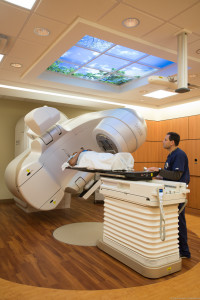 Melanoma is an aggressive form of cancer that carries a high risk of metastasis to lymph nodes or other parts of the body. While the best possible treatment for melanoma is surgical removal, patients with advanced stages of the disease may require other forms of treatment.
Lee cites the use of lymphoscintigraphy (sentinel lymph node mapping) — an imaging technique used to find the sentinel lymph node (the first node to receive lymph from a tumor), which can be removed and checked for tumor cells — as an advancement that could help determine patient’s risk and additional  therapies from which an individual patient could benefit.
“We’re looking to provide better diagnostic capability,†he says. “By using this type of lymphatic mapping and then a biopsy of the sentinel lymph node, we can determine whether or not the regional lymph nodes contain cancer. And that helps us determine which therapies — surgery, radiation or drugs — are most appropriate for the patient and can improve his or her outcome.â€
For patients with late stage melanoma, progress is being made in immunotherapy and targeted-therapy treatments.
“There are several new agents that have been approved in the past year, and there are several more that will be approved in the near future that have increased activity in advanced melanoma,†states Davidson. “Additionally, there are clinical trials now underway that are examining the use of these new erimmunotherapies for patients with Stage III melanoma.â€
While sarcoma is largely treated with surgery, it can also be treated with a combination of radiation and surgery or with systemic therapy . And because sarcomas originate in the soft tissues — muscle, fat, blood vessels, nerves, tendons and synovial tissues that connect, support and surround other body structures — limb preservation is an important consideration.
“The addition of radiation therapy in the treatment of extremity sarcomas allows for limb preservation,†explains Davidson. “For example, if a patient has a sarcoma on the thigh that is intimate with the femoral or sciatic nerve, we can add radiation therapy followed by surgery and preserve nerve function: brachytherapy catheters are placed at surgery around the nerve to eradicate any remaining microscopic tumor cells. Obviously this avoids amputation of the affected limb but maintains solid oncologic principals of treatment.â€
Davidson adds that IMRT (Intensity-Modulated Radiation Therapy) is another effective treatment for sarcoma because it allows for a very specific dose of radiation to be administered to challenging anatomic sites without increasing the deleterious effects of radiation on normal, adjacent tissue..
“IMRT reduces morbidity of the treatment, but it doesn’t reduce its effectiveness,†he notes.
Multidisciplinary architecture is key
Lee stresses the importance of the team approach in treating patients effectively, successfully and holistically.
“One of the biggest advances that the oncology community has made, and that we have adopted in our program, is the concept of multidisciplinary and multi-modality care,†he says. “By gathering specialists — not just doctors, but the extended medical disciplines as well — in the same room to discuss individual cases  in a team approach, we have made huge advances in patient care and created a tangible defense in patient management.â€
Melanoma Facts
Melanoma occurs in melanocytes, the cells that color the skin and make moles, or nevi. Melanoma is the most serious type of skin cancer because it can spread to lymph nodes and distant organs. Although it accounts for less than 5% of all skin cancers, it is responsible for about 80% of skin cancer deaths.
Melanoma is classified in a few different ways:
- Cutaneous melanoma, which occurs on the skin and is the most common type of melanoma
- Mucosal melanoma, a rare form of melanoma that occurs in the mucous membranes, such as the nasal passages, throat, vagina, anus or mouth
- Ocular melanoma (or uveal melanoma), a rare form of melanoma that occurs in the eye
- Metastatic melanoma, not a type of melanoma, but a term used for melanoma that has spread beyond the original site to the lymph nodes or to distant organs
—Melanoma Research Foundation
Sarcoma Facts
Sarcoma is a cancer of the connective tissues, such as nerves, muscles, cartilage, joints, bone or blood vessels. It can arise anywhere in the body, frequently hidden deep in the limbs.
- About 1% of all adult cancers are sarcomas.
- Between 15-20% of all children’s cancers are sarcomas.
- When possible, sarcoma patients have surgery to remove the cancer. Surgery is often combined with chemotherapy and/or radiation.
- Sarcomas are often misdiagnosed. Sometimes they are thought to be sports injuries. When they are diagnosed, they may be large and difficult to remove surgically and they may have metastasized.
- Because sarcoma is so rare, many physicians have never seen a case.
- Many sarcomas resist current treatments.
 —Jim Hauser Sarcoma Foundation


