 “Don’t get old!” our patients jokingly caution as we sit in the exam room with them. We know the individuals who warn us with levity recognize that processes and abilities they once recognized in their bodies as routine have started to change.
The ongoing process of aging is one hallmarked by senescence, as biologically protective and regenerative cellular mechanisms are diminished over time.
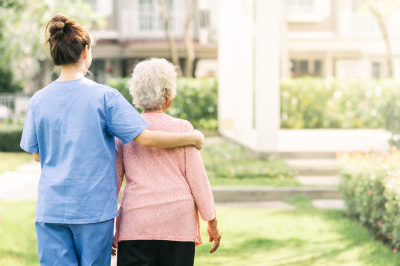
Human care needs an increase in complexity as organ systems, special senses and even the ability to regulate sleep and wakefulness are altered. We become more vulnerable to disease and eventually to death. The need for caregivers who serve the aging population is great, and the toll this noble task takes on caregivers cannot be ignored.
While the process of aging remains a constant for humanity, the number of aging individuals in our population is growing. More and more seniors are trying to prolong their independence and remain at home rather than make the move to community living arrangements. Therefore, the burden of their care often falls upon unpaid, informal caregivers who are most commonly relatives (89%) but can also be neighbors or friends (10%). According to the AARP and the National Alliance for Caregiving Report (2020), data show that 1 in 5 Americans now serve in this role, totaling approximately 53 million informal caregivers nationwide.
Caring for an aging or disabled individual can be immensely rewarding as well as physically and emotionally demanding. Studies show that caregivers often sacrifice their own health and well-being to dedicate themselves to assisting their care receivers with a wide range of personal needs. This can include the instrumental activities of daily living (iADLs) such as shopping, meal preparation, transportation, medication management and housekeeping.
Later, as health declines, the activities of daily living (ADLs) such as bathing, grooming, transferring, toileting and feeding become paramount. As patients approach the end of life, caregivers may assume the role of a proxy in medical care and important decision-making.
According to the Centers for Disease Control and Prevention, 21% of caregivers reported that they had not had a routine check-up in the past year, 36.7% reported insufficient sleep (defined as fewer than seven hours in 24 hours) and 33% reported being limited because of their own physical, mental or emotional problems. Research suggests that by neglecting their own health, caregivers are at greater risk of personal chronic disease progression, fatigue, burnout, morbidity and mortality as compared to non-caregivers.
As more families embrace the decision and responsibilities of caring for aging and disabled family members in the home setting, physicians and advanced practice providers (APPs) have a unique and significant opportunity to provide support. The CDC has identified the need to support caregivers as an emerging public health issue.
How Primary Care Providers Can Help
Those working in the primary care setting should anticipate the needs of this growing population of caregivers and actively screen for caregiver fatigue in patients who provide this care. Generally, caregivers view their duties as an altruistic commitment and therefore desire to report their experiences with caregiving as positive and rewarding. Unsurprisingly, there may be hesitancy in sharing negative symptoms of caregiver fatigue. For primary care providers, it is important to recognize that these symptoms may mimic generalized anxiety and/or depression. Signs of caregiver fatigue may include:
- Decreased or total lack of pleasure in previously enjoyable activities
- Increased feelings of tiredness, fatigue or isolation
- Interrupted sleep patterns or excessive sleeping
- Increased feelings of depression, sadness, being overwhelmed or worry
- Enhanced complaints of pain, headaches or other illnesses
Utilizing common screening tools such as the PHQ-2/9 and the GAD-7 to screen caregivers offers a great preliminary approach for practitioners. We should also be prepared to ask additional questions and validate the caregivers’ experiences and emotions, leading to better outcomes for everyone. Primary care physicians and APPs enable better outcomes when they:
- Ensure that the caregivers, the people they care for and families understand the medical condition(s), the plan of care and prognosis.
- Educate caregivers about when and who to contact with concerns.
- Refer caregivers for supportive services and resources when appropriate.
- Encourage family caregivers to ask for help, set reasonable expectations and goals, and focus on what they can do.
- Empower family caregivers to seek healthcare services for themselves and stay up-to-date on their own general preventive care needs.
- Promote social and community involvement through local and online support groups, religious organizations, hobbyist groups and intramural sports or other physical activities.
Providing Resources
Primary care physicians and APPs should be well-versed in local resources to address caregiver fatigue. We should identify community resources that provide the appropriate respite and support for caregivers to combat burnout such as in-home respite care providers, adult daycare and senior community centers, and short-term nursing homes.
Early preparation can also eliminate some of the fatigue and frustration that can arise from caring for a family member who also has a heavy medical burden. The CDC offers several resources to assist caregivers in planning for respite care, including care plan templates (cdc.gov/aging/publications/features/caregivers-month.html). These documents assist with compiling general demographics, as well as important healthcare information such as medication lists, healthcare providers and emergency contact information in one easy-to-access document. There are also numerous resources online and throughout Georgia to support in-home caregivers and their family members.
The toll on informal caregivers can be significant, but we can make a positive impact by incorporating the ideas listed in our standard approach. As exam room communication and home-to-office coordination increase, so will satisfaction for both providers and patients who are caregivers.
Resources
In the state of Georgia, there is an abundance of resources available to support the in-home family caregiver and their older or disabled family member.
- Georgia Department of Human Services Division of Aging Services
- aging.georgia.gov/tools-resources/caregiving
- Local Georgia Area Agencies on Aging (AAA)
- aging.georgia.gov/locations
- Georgia’s Aging & Disability Resource Connection
- 1 (866) 552-4464
- georgiaadrc.com
- Rosalynn Carter Institute for Caregivers
- Caregiver Action Network (CAN!)
AARP has local Georgia branches and corporate resources that provide information for home caregivers through its resource line and online community support groups.
- AARP Toll-Free Family Caregiving Resource Line
- English: 1 (877) 333-5885
- Spanish: 1 (888) 971-2013
- AARP Online Community – Caregiving
- community.aarp.org/t5/Caregiving/ct-p/Caregiving?intcmp=AE-CAR-BAS-IL-OC-SUPPORT
- AARP Home & Family Caregiving
- aarp.org/home-family/caregiving
 Connie Borgerding, DO
Connie Borgerding practices family medicine in Marietta at Wellstar Primary Care. She is active with the American College of Osteopathic Family Physicians (ACOFP) and serves on the Board of Directors for the Georgia Society ACOFP.
 Carolyn Smallwood, DO, FAAFP, MPH
Carolyn Smallwood is a primary care physician working for Wellstar Health System. She is a fellow of the American Academy of Family Physicians. Her professional activities include practice leadership, physician well-being and precepting residents.
 Shannon Shockley, MSN, FNP-BC
Shannon Shockley lives and works in Marietta.Her extensive nursing background includes cardiology and emergency medicine.
 Tannisha Simmons, MHA, MSN, FNP-C
Tannisha Simmons is a certified family nurse practitioner specializing in primary care with an 11-year background in nursing and nursing leadership. She is passionate about healthcare dis-parities, health policy and education, and community service.


