 As practicing physicians, we have often wondered why Georgia is at the bottom of the maternal mortality statistics. There is also great concern about maternal morbidity (near-misses).
Why, with all the advances in science, are we still trying to save moms, instead of celebrating the joys of motherhood with them? Why are women of color more at risk? What do we as physicians and practitioners need to do differently?
Why has the healthcare system in Georgia failed women and their families in our rural communities?
To answer the questions that we ponder, we should start with a radical analysis of our current healthcare infrastructure and linkages to care, especially in our rural communities. It is unacceptable that only half of the 159 counties in Georgia have access to an obstetrician-gynecologist, and only two of the 30 critical access hospitals that still deliver obstetric care. That makes it extremely difficult for many patients living in rural communities who have an exponential travel burden impacting coordination and continuity of care.
In addition, to the inherent challenge that obstetric care involves 2 patients, access to maternal fetal medicine and other specialty care as well as tertiary level care for mothers and babies is further magnified and frequently time sensitive. Care considerations may include questions like can my late pre-natal care patient have expedited access to a cardiac echocardiogram and cardiology consultation? Do I have access to blood products for my preeclamptic labor patient with risk of HELLP syndrome? Can anesthesia support my pregnant patient with preexisting cardiovascular condition undergoing cesarean section? And will I be able to find an available ambulance or a helicopter at 2 a.m. to transfer a pre-term patient whose baby will need higher level of neonatal care at birth?
Unfortunately, the current modus operandi of our healthcare system designated to maintain maternal and neonatal health, is fueling burnout among our physicians and healthcare professionals, compounding the burdens and barriers of our patients, and compromising patient safety.
Please do not misinterpret our intent, we are reviewing the data of every maternal death in this state to determine the root causes. From this data, we know that about 50% are related to cardiovascular events. This knowledge will guide our efforts to address these issues, BUT we still have a lot of rural and underserved rural areas that do not have access to coordinated care.
Future rural maternal healthcare models will need to incorporate interdisciplinary care pathways with subspecialities and will need to establish a regional rapid response system to expedite care when necessary.
So, on that opening note, we have written a collective call to action in the form of petition letters from the hearts of Georgia’s rural OB/GYN’s:
First to our GEORGIA PHYSICIANS:
We would like to remind you that everyone practices women’s health and encourage you to think outside of your specialty to deliver care that crosses the spectrum of a women’s life. This means if you have a woman of childbearing years, have the conversation that optimizes her chances of a healthy pregnancy -before, during, and after.
Ask if she has recently been pregnant or had medical issues during one of her pregnancies. What happens to her during her pregnancy is a window to her future health outcomes since conditions like diabetes and hypertension will often reveal themselves and can have a lifetime impact.
Please don’t wait until you are called to a “Code Blue” in labor and delivery to understand maternal physiology and what happens when a pregnant patient delivers. Granted, while most deliveries occur without difficulty, with the increase in co-morbid conditions in our patients of childbearing years, the complications of pregnancy are on the rise.
To our GEORGIA LEGISLATORS:
We want to inspire an energetic fecundity of policies that protect mothers and babies while preserving health care professionals who commit to caring for them. Thank you for your support for maternal health and extending Medicaid coverage for 12 months post-partum. But…we need funding to support initiatives that can allow all 159 counties to have access to a physician and hopefully a women’s health clinician in the same county or nearby.
Don’t let more mothers perish because of a lack of policy. Just because they have Medicaid does not mean they can find a clinician to care for them.
The desire to have healthy mothers and babies in Georgia is not a political paddle but rather it is a bipartisan directive that must remain non-negotiable. We need a state-wide maternal transport system to get patients quickly and safely to regional care facilities where they can receive the expert care they sometimes need while pregnant. We need a maternal network that could function as the spokes of a wheel where a traveling team of clinicians could go into underserved areas for prenatal visits, then refer to the “hub” when the patient needed a higher level of care.
To our GEORGIA HOSPITALS:
We want you to remember that not everything can be measured in dollars, but everything can be measured by days of life. We need the commitment of all healthcare systems in Georgia to work toward improving maternal outcomes. This means putting into place protocols and pathways that have been shown to improve maternal outcomes.
Can we learn from other states? It is imperative that we move forward with renewed vigor to ensure that our actions and reactions represent the highest standards of care. Please do not forget your administrative responsibility to model and integrate core values of respect, dignity and integrity. There is no time like the present to make our good, better; to make our better, best; and to make our best, the best ever.
To our GEORGIA LEADERS:
What we want from you is aptly captured by the quote from Dr. David Satcher, former Surgeon General, and one of Georgia’s remarkable leaders who said, “we need leaders who first car enough. We need leaders who learn enough. We need leaders who do enough. We need leaders who will persevere until the job is done.”
We need your influence and guidance in mapping out this journey of improvement in maternal health outcomes. Just like a teacher who impacts eternity. Likewise, you cannot measure where your influence stops. So, it’s great if you get it right, but not so great if you get it wrong.
Leadership is no place for self-serving motives. At least 2 tenets of the Rotary international 4-way test should apply to every single decision you deliberate…is it fair to all concerned and does and will it be beneficial to all concerned. Lastly, is there representation not yet included or excluded that could add meaningful value to the communities we govern?
To our GEORGIA EDUCATIONAL INSTITUTIONS:
We want you to continue to elevate the importance of investing in educational assets to maximize short-term and long-term academic growth in our faculty and students across all sectors of healthcare, especially those working in rural areas and underserved populations.
Sound financial advice recommends that we diversify the portfolio and capitalize on the compounded interest over time. The same principles apply to education in healthcare – what do you need to add or subtract from the current academic infrastructure to upgrade skills and integrate new technological innovations? How can you strategically expand the workforce to improve appropriate distribution, recruitment and retention? Thank you for your dedication and commitment to establishing a legacy of exceptional healthcare for present and future generations.
To our GEORGIA FAMILIES:
Very much like the sun, not many will argue that women are the center of the universe. Because you depend so heavily on the “light” from your moms, grandmothers, and all the wonderful women in your lives, you have an inherent responsibility to help to prioritize their health in every way. You must be gentle but empowering when you tell women to avoid tobacco products during pregnancy, or to call the doctor if they feel short of breath or have too much swelling in the legs after pregnancy.
As sure as the sun will rise, even when moms do not feel their best, they still give their best…and since you are the primary beneficiaries, you have a shared responsibility to care for moms with that same devotion. We agree that “no woman should die while giving life”, and so we thank you for being our “partners in care” as we work to improve pregnancy and pregnancy-related outcomes for every woman in Georgia.
Maternal healthcare matters and We need EVERYONE to come to the table with an open mind. We can do this!
References
https://www.georgiapolicy.org/news/addressing-georgias-healthcare-shortage/
file:///C:/Users/keisha.callins/Downloads/MMR_Report_releasedJune2023.pdf
https://my.rotary.org/en/guiding-principles
 Keisha R. Callins, MD, MPH
Dr. Callins is an advocate for rural, underserved patients. She serves as an obstetrician-gynecologist with Community Health Care Systems and is a clinical professor at Mercer University School of Medicine. She is past chair or the National Advisory Council for the National Health Service Corps and a former National Health Service Corps Scholar. Dr. Callins earned her undergraduate degree from the University of Virginia; Master of Public Health from the University of Alabama; and Doctor of Medicine from Morehouse School of Medicine.
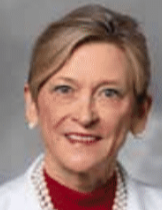 Sandra Reed, MD, FACOG
Dr. Reed is a board-certified obstetrician and gynecologist who is on faculty at Emory University’s Department of Gynecology and Obstetrics. She has devoted her professional career to women’s health, having delivered well over 2,000 babies. Dr. Reed completed her medical school and her residency at the Medical College of Georgia at Augusta University before practicing obstetrics and gynecology in a small rural Georgia community for the next 25 years. She is a past president of the Georgia Obstetrics and Gynecology Society, the Medical Association of Georgia and District IV of the American College of Obstetrics and Gynecology (ACOG).


