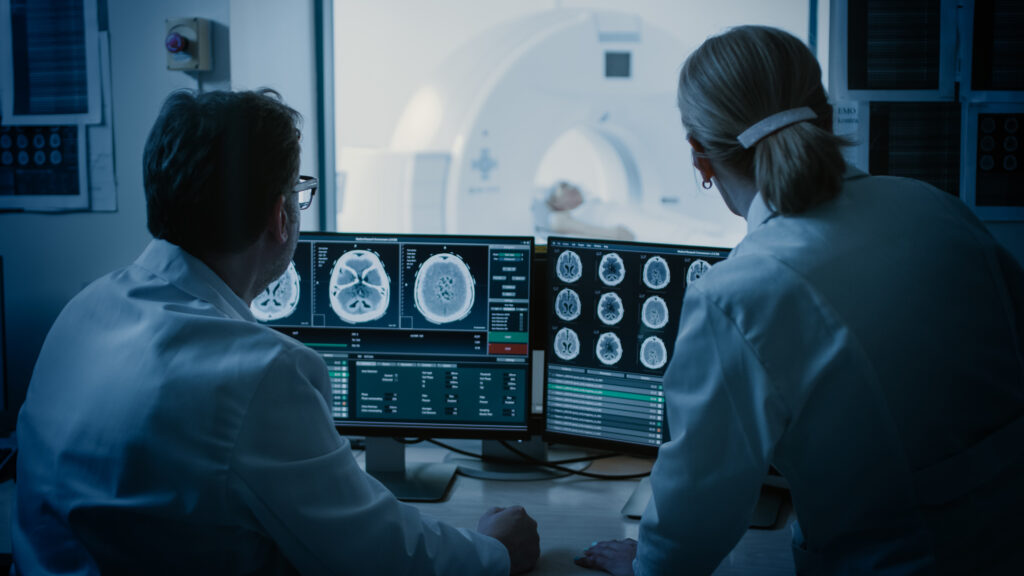
Imaging in patients with suspected Alzheimer’s disease has generally been performed to exclude other diagnosis and to detect other comorbidities. With emerging ability to detect distinct pathological features, proteins and structural abnormalities pre-mortem, there is hope that imaging will help differentiate forms of dementia early on. Imaging can also aid in the monitoring of new disease-specific therapies looking for both response and potential untoward side effects.
Pre-mortem diagnosis is now possible, and current and future testing should allow us to diagnose patients early. Therapies targeting amyloid pathology have emerged. Treatments are under development targeting other aspects of Alzheimer’s disease, such as tau pathology, making the correct diagnosis imperative in targeted therapies.
I recently attended a conference discussing artificial intelligence (AI) applications in the future of neurology. There is reason to believe even the cell phone will start picking up signs of neurodegenerative disease patterns, such as in speech and motion sensoring patterns, years before a person becomes symptomatic. The technology is obviously moving at light speed.
Current imaging tools exists and will evolve to include computer generated quantitative analysis that will allow us to separate these disorders, possibly years before a person develops symptoms. Hopefully these imaging patterns will lead us to personalized treatments for the various disorders.
Conventional MRI
MRI is the preferred initial imaging modality for patients suffering from alterations in cognition. The primary role has been to exclude the many other diseases that can affect memory.
Often, patients in the common age range for Alzheimer’s disease (over 65 years old) have multiple pathologies. The most common are ischemic disease (either large vessel strokes or small vessel atherosclerosis) and microhemorrhages. The 3T MRI field strength is superior to the 1.5T in picking up subtle hemorrhagic and ischemic changes.
MRI imaging is becoming more able detect morphological patterns often seen in regions of the brain to help with the diagnosis of Alzheimer’s and several other neurodegenerative processes. These morphological patterns can aid the clinical diagnosis.
Advancing MRI Techniques and Quantitative Data
With Alzheimer’s pathology, there is loss of cortical mass in characteristic locations, primarily the mesial temporal lobes and the temporoparietal regions. In later stages of the disease process, these areas of atrophy can be appreciated by the naked eye. This can be seen on MRI imaging. Computerized quantitative data allows individual comparison to normative values.
Many commercial software packages exist adding computer-generated volumetric and quantitative data as part of the scanning processes and report. Most often, these computer analysis are used in specialty and research settings. However, their use will become more important in early diagnosis and in safety monitoring in patients on targeted therapies due to their ability to detect subtle changes.
With the advent of new therapies targeting amyloid deposition comes the risk of brain edema and hemorrhage (ARIA-E and ARIA-H, amyloid related imaging abnormalities, edema and hemorrhage, respectively). Depending on the patient’s symptoms and degree of swelling or hemorrhage, the clinician determines if a patient needs to temporarily or permanently halt treatment.
While mostly mild and asymptomatic, these treatment-induced side effects can be life-threatening. The FDA recently approved computer-generated analysis from one of the software companies, Icometrix, aiding the radiologist in picking up ARIA, which can be missed by the naked eye. Other software companies have similar techniques under development.
Nuclear Medicine
PET scanning and CSF analysis are currently the gold standard for confirming amyloid and tau pathology in Alzheimer’s disease. With therapies targeted at these specific proteins, one of the two tests must be performed to confirm the pathology.
The PET scan is by far the patient preference due to the semi-invasive nature of CSF analysis, the lumbar puncture. Until recently, neither Medicare nor private insurance companies would pay for the PET scan due to the high cost of the PET tracer compounds. With FDA approval of therapies targeted at amyloid, this has changed.
PET scanning’s biggest obstacle is access. Locations are limited. Scanning compounds are felt to be safe, but radioactive, and need to be prepared close to imaging centers and used over a short amount of time. Imaging centers limit days available so many patients can be performed on the same day.
There are three types of PET scans used. In a FDG PET, the F-18 fluorodeoxyglucose compound is used to look at regions of brain metabolism. Findings overlap and are not as specific for Alzheimer’s disease.
In Alzheimer’s, hypometabolism can be seen in the temporoparietal, precuneus, and posterior cingulate regions. In early AD, regions can be asymmetric. FDG PET can be more helpful in excluding other pathologies such as frontotemporal dementia or posterior cortical atrophy.
With an amyloid PET, several amyloid PET compounds have been developed that bind to beta-amyloid fibrils allowing for the establishment of amyloid pathology. However, normal controls can show amyloid deposition (approximately 15%), and the degree of deposition does not seem to correlate with the degree of cognitive impairment. Therefore, a positive test enables us to confirm amyloid pathology pre-mortem and is necessary for treatment with anti-amyloid therapies, but it alone is not sufficient for the diagnosis.
Amyloid PET scans can also be used in therapy monitoring. It enables the clinician to see if the therapy is working to clear amyloid. It likely will guide dosing and frequency over the long term.
Lastly, a Tau PET uses PET compounds targeting tau accumulation to establish tau pathology. Although currently only used in research environments, as therapies develop for tau pathology these compounds will likely be used in clinical practice similar to the amyloid PET compounds.
As clinicians, we all hope for easy-to-use, accurate, affordable, reproduceable testing for any disease we diagnose and treat. There is hope that blood biomarkers could replace invasive and expensive tests in the diagnosis and monitoring of our patients with Alzheimer’s disease. Imaging will undoubtedly continue to play a role and contribute to the accurate diagnosis and treatment of Alzheimer’s disease.
 Dr. English is Medical Director of the Atlanta Neuroscience Institute (formerly known as the Multiple Sclerosis Center of Atlanta) and is on staff at Piedmont Hospital and Tanner Medical Center. He received his undergraduate degree from Boston College and his medical degree from Dartmouth Medical School. Dr. English served his internship, residency and fellowship at the University of Maryland Medical Center.


