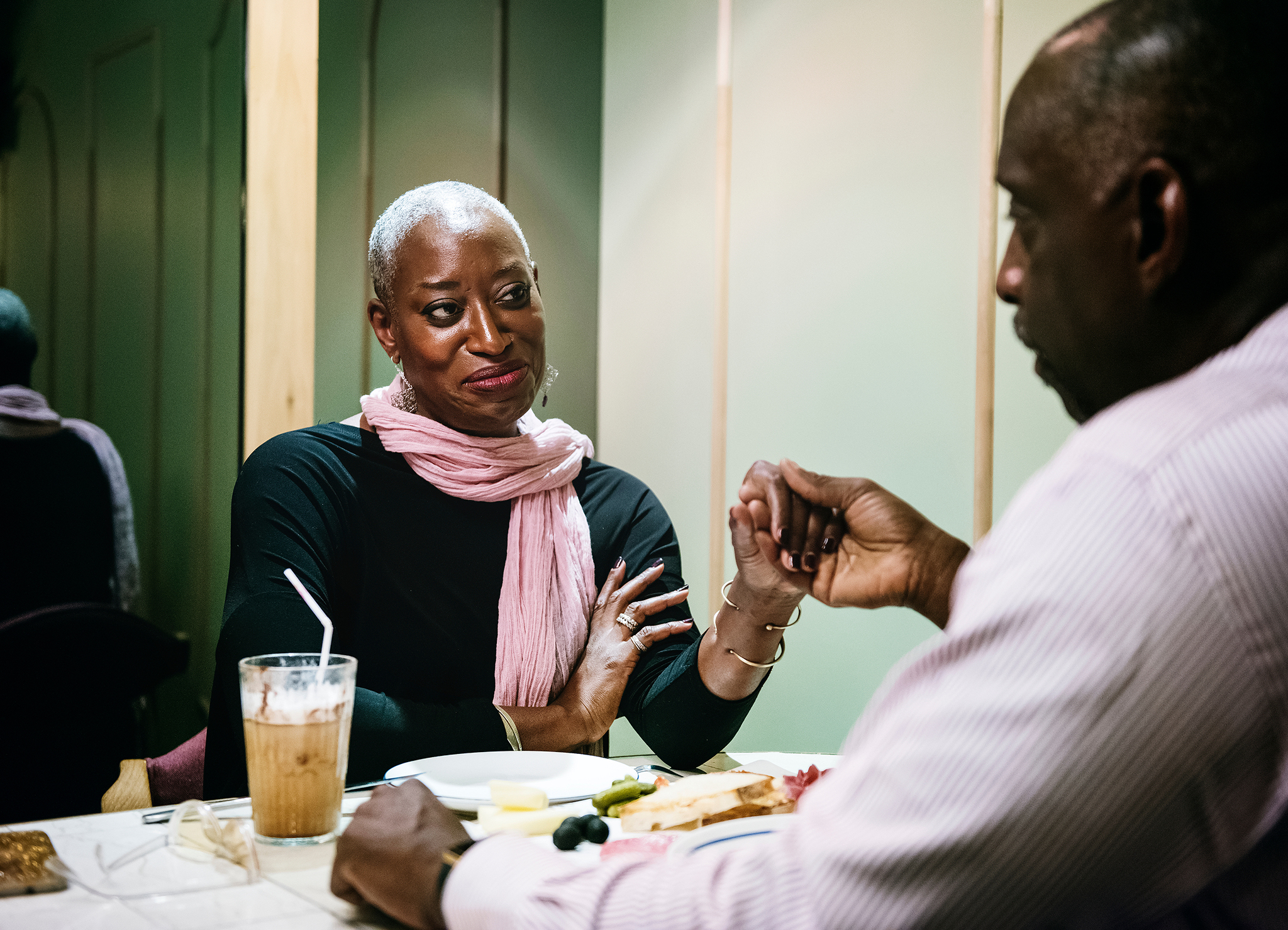
Menopause is a universal life transition that affects roughly half the US population, yet too often it is treated as a private, isolating experience limited to the individuals undergoing the process. Importantly, menopause affects more than biology; it shapes daily functioning, emotional and psychosocial well-being and quality of life (Whiteley 2013). While clinical care and patient education have advanced, a surprising gap remains – partners and support networks are almost never included in menopause education.
Recently, we conducted a comprehensive review of menopause patient education interventions. None of the 2,000+ studies screened from multiple databases intentionally included spouses or partners in the education process. When partners were mentioned, it was typically in the context of couples or sex therapy, not as active participants in menopause education and support. This reflects a broader gap in research and a missed opportunity in practice. The limited evidence we do have suggests that educating support people can meaningfully improve the menopause experience. For example, a large cross-sectional study of spouses in eastern India found that more than 90% had inadequate knowledge about menopause. While many recognized the physical symptoms and its impact on their relationship, few lacked the information to contextualize and respond supportively to their partner’s experiences, highlighting the need for information and education on menopause (Vijayan 2025).
To explore this further, we conducted a focused PubMed review and identified 4 studies which specifically incorporated spousal/partner education (Bahri 2016, Rouhbakhsh 2019, Yarelahi 2021, Yoshany 2017). While limited, the studies are geographically diverse and consistently point to a common conclusion: engaged, informed partners can improve women’s quality of life and relational health during menopause.
Educating Partners Improves Quality of Life and Coping
In a randomized controlled trial conducted in Iran, spouses of menopausal women were invited to attend three structured training sessions on menopausal health. Three months after the intervention, the spouses in the education group demonstrated significantly greater knowledge and caregiving behaviors and improvement in their partners overall quality of life when compared to controls (Yoshany 2017).
Another structured intervention used a Couples Coping Enhancement Training model where 80 postmenopausal women and their spouses underwent four training sessions. This led to increased menopausal knowledge, shared coping amongst couples, and improvement in participant’s quality of life when compared to controls (Yarelahi 2021). This study’s findings suggest that couples who learn about menopause together can better co-manage the related symptoms and stress as a team.
Education Boosts Marital Satisfaction
Beyond symptom management, partner education can strengthen relationships. In a randomized controlled trial of 100 couples in Iran, spouses who received menopause education (3 one-hour long sessions), experienced significant improvements in their knowledge and in their partner’s marital satisfaction when compared to controls (Bahri 2016). A similar study was conducted among 80 couples who received four menopause education sessions, and the results showed that there was an increase in marital satisfaction in the intervention group compared to controls (Rouhbakhsh 2019). This highlights that menopausal education for partners benefits emotional and psychosocial wellbeing and improves partnership satisfaction.
Why This Matters
While there are only a few, mostly international studies they point to a consistent theme – when partners/support people are educated about menopause, everyone benefits. Despite this, support person education remains rare in medical practice and is nearly absent in the research literature. This is especially notable given evidence that shows social support is linked to reduced symptom burden and improved quality of life (Divya 2024). Partner education can be a powerful tool for better menopause care.
What is particularly exciting about this, as well, is that inviting partners to participate in menopause education requires minimal infrastructure or cost. Clinicians and educators can start by:
• Inviting and encouraging patients to bring a partner or support person to menopause visits, counseling and/or education sessions.
• Providing take-home materials for support people with simple explanations of common menopausal symptoms and suggestions on how to help.
• Hosting partner-inclusive workshops/webinars/education sessions that cover the biology of menopause, symptom management options and relational strategies for supporting a loved one.
These steps do not assume that all patients have or will want a partner involved. Rather, they create an opportunity for patients who do want partners to be included.
A Call to Action for Clinicians and Health Systems
As a society, we are finally beginning to talk more openly about menopause. However, we have largely ignored that it often occurs within the context of relationships and families. For many women, the quality of support they receive at home can influence symptom experience, emotional well-being and health-seeking behaviors.
We need more rigorous research, especially in diverse US populations, to evaluate partner inclusive menopause education and to adapt approaches to different cultural and relational contexts. However, the absence of evidence should not prohibit action. The evidence we do have points to benefit and there is likely low risk and high reward to supporting partner menopause education.
Menopause is not a solo journey; and our education strategies should not be either.
References
• Bahri N, Yoshany N, Morowatisharifabad MA, Noghabi AD, Sajjadi M. The effects of menopausal health training for spouses on women’s quality of life during menopause transitional period. Menopause. 2016 Feb;23(2):183-8. doi: 10.1097/GME.0000000000000588. PMID: 26783984.
• Divya KL, Nimithamohan K, Bilimale AS, Muralidhar K, Krupp K, Madhivanan P. Role of Social Support in Reducing the Severity of Menopausal Symptoms among Women Living in Rural Mysuru, Karnataka: An Analytical Cross-sectional Study. J Midlife Health. 2024 Jan-Mar;15(1):12-18. doi: 10.4103/jmh.jmh_180_23. Epub 2024 Apr 4. PMID: 38764924; PMCID: PMC11100633.
• Rouhbakhsh M, Kermansaravi F, Shakiba M, Navidian A. The effect of couples education on marital satisfaction in menopausal women. J Women Aging. 2019 Sep-Oct;31(5):432-445. doi: 10.1080/08952841.2018.1510244. Epub 2018 Aug 22. PMID: 30132741.
• Vijayan SM, Digal M, Misra S, Pan R, Renu, Gajbhiye R, Manna R. Awareness of Menopause and its Associated Factors among Men in Eastern India. J Midlife Health. 2025 Apr-Jun;16(2):157-165. doi: 10.4103/jmh.jmh_32_25. Epub 2025 Jun 23. PMID: 40636846; PMCID: PMC12237183.
• Whiteley, J., DiBonaventura, M. daCosta, Wagner, J.-S., Alvir, J., & Shah, S. (2013). The Impact of Menopausal Symptoms on Quality of Life, Productivity, and Economic Outcomes. Journal of Women’s Health, 22(11), 983–990. https://doi.org/10.1089/jwh.2012.3719
• Yarelahi M, Karimi M, Asadollahi A. Dose spouses’ coping skills promote qol and dyadic coping of menopausal women? Women Health. 2021 May-Jun;61(5):431-439. doi: 10.1080/03630242.2021.1917478. Epub 2021 Apr 25. PMID: 33896402.
• Yoshany N, Morowatisharifabad MA, Mihanpour H, Bahri N, Jadgal KM. The Effect of Husbands’ Education Regarding Menopausal Health on Marital Satisfaction of Their Wives. J Menopausal Med. 2017 Apr;23(1):15-24. doi: 10.6118/jmm.2017.23.1.15. Epub 2017 Apr 28. PMID: 28523255; PMCID: PMC5432462.


