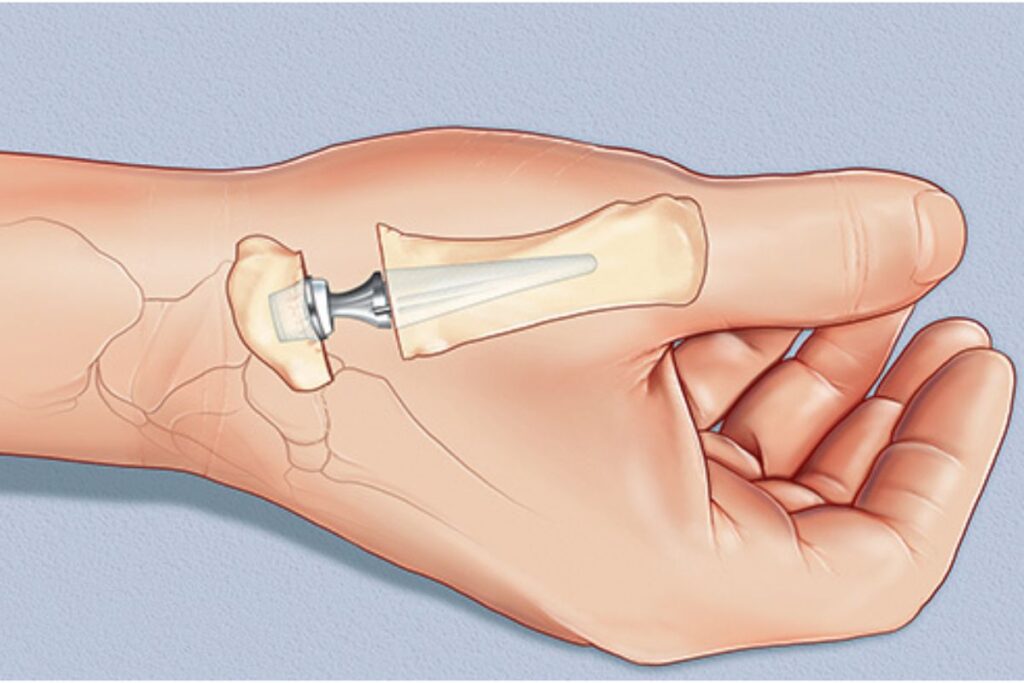
Georgians and those living in the Southeast now have access to a new surgical option for advanced thumb arthritis through Emory Healthcare, the first health system in the region to offer total thumb arthroplasty.
Thumb arthritis is the second most common site of arthritis in the hand, according to the American Society for Surgery of the Hand. The condition typically affects women over age 40 more frequently than men.
Until recently, the standard surgical treatment required patients to wear a splint for up to six weeks and complete up to six months of physical therapy before regaining meaningful hand function. Total thumb arthroplasty offers a significant alternative, replacing the damaged joint with a miniature ball-and-socket implant similar in design to a hip replacement, but built for the thumb.
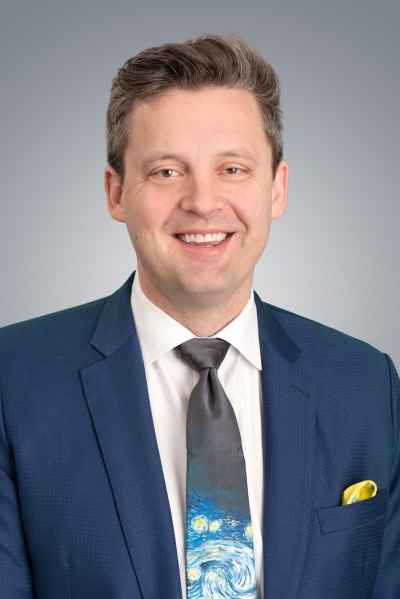
Eric Wagner, MD, director of hand and upper extremity surgery at Emory Healthcare and associate professor of orthopaedics at Emory University School of Medicine, introduced the procedure at Emory. The health system was the third in the United States to adopt the new procedure.
“Bringing this treatment to our patients is something we have been very excited about,” says Wagner. “It is a truly revolutionary advancement that is going to become the standard of care and totally change what people can do with their hands.”
Recovery under the new procedure is significantly faster. Most patients are out of a soft dressing within 10 to 14 days and return to nearly all normal activities within six to eight weeks. Wagner notes that many patients are able to shake his hand at two weeks post-surgery, a milestone that would typically take six months to a year to reach with the previous procedure.
“The recovery time is remarkably shorter,” says Wagner. “We now have an option that rivals hip and knee replacements and provides a real solution for patients who want to stay active.”
The procedure is indicated for patients with advanced thumb arthritis and has been performed in Europe for nearly a decade with promising medium-term results. It received approval from the FDA in July 2025. As with any joint replacement, the risks include the possibility of dislocation or fracture, though these complications have not been common in early experience.
Patients who are active and want to return to activities such as gardening, golf, painting, or playing a musical instrument now have a promising new option.
Dr. Wagner, MD completed his undergraduate education at University of California, Davis. He then completed medical school at the University of Chicago, Pritzker School of Medicine. Following medical school, he completed his orthopaedic surgery residency training at the Mayo Clinic in Rochester, Minnesota. After residency, Dr. Wagner was selected to train in the top ranked Hand and Microvascular Surgery at the Mayo Clinic in Rochester, Minnesota.. Wagner was then selected to train in the prestigious Harvard’s International Shoulder and Elbow Fellowship at Massachusetts General, and Brigham and Women’s Hospitals. His clinical areas of specialty include common and complex pathologies from the shoulder through the hand. He specializes in treating many of the most complicated and complex pathologies within the upper extremity, recognized as a national and international expert in the advanced arthroscopy and joint replacement techniques.


