For decades, many Georgia physicians viewed owning the real estate their practice occupied as an essential part of long-term stability. Ownership provided control, predictable costs, and an asset that grew over time. Over the last decade, however, strong valuations led many groups to sell their buildings through long-term sale-leasebacks, unlocking capital while maintaining full operational control. These transactions supported expansions, technology upgrades, debt reduction, and partner distributions at pivotal moments in the life of the practice.
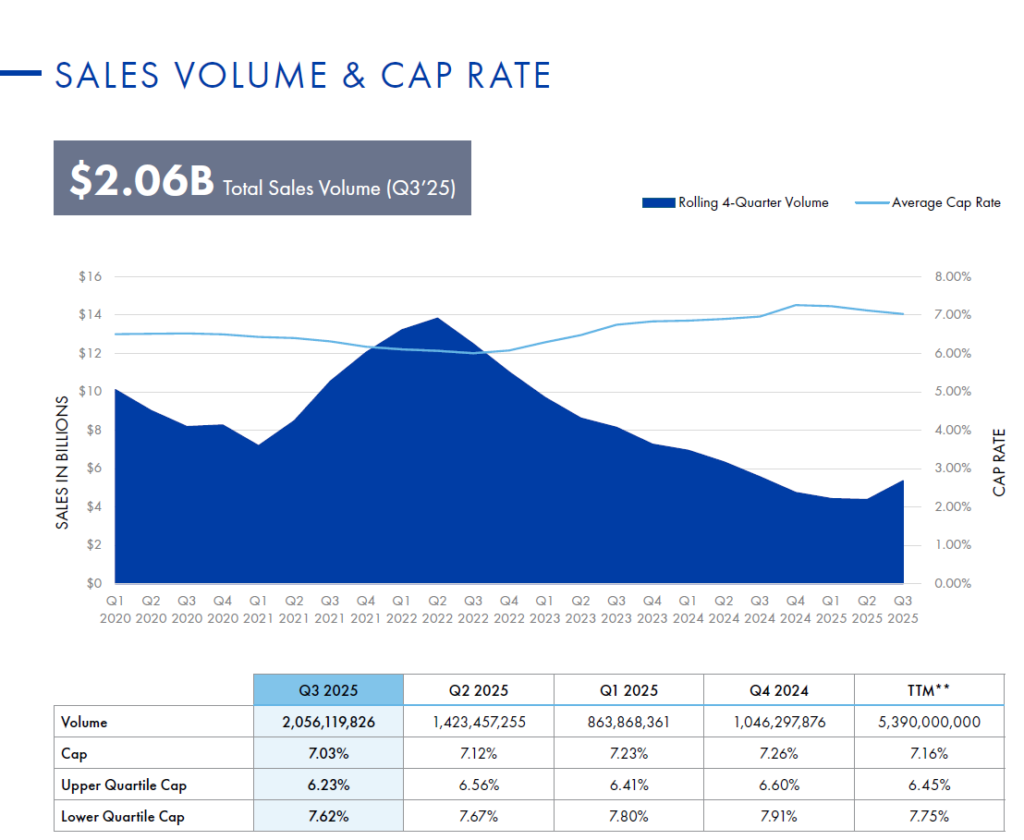
Today, the healthcare real estate environment is shifting once again. According to Q3 2025 data, cap rates have tightened to 7.03%, transaction volume has climbed 45% to $2.06B, and pricing for medical properties—including $420/SF for MOBs and $548/SF for urgent care facilities—reflects renewed investor demand. This renewed momentum offers physicians a timely chance to reassess how their real estate aligns with their long-term goals.
One of the most overlooked truths in physician real estate decisions is that the building is not the strategy itself but rather a tool that can be leveraged as a practice evolves. The right approach to real estate changes as a practice grows, leadership evolves, or financial priorities shift. For physicians who sold their buildings five to seven years ago, today’s market may offer a renewed opportunity to regain ownership at a more favorable cost basis. Rising rents, renewed investor activity, and increased competition for medical office assets mean that ownership can once again provide cost control, long-term stability, and a platform for future expansion.
The opposite can also be true. For other practices, selling in today’s market may be the more strategic choice—especially when the capital released can fuel higher-yield initiatives inside the practice. A sale-leaseback can fund expansions to the existing building or support the opening of a new location in a high-growth corridor. It can also provide the resources needed to recruit an additional provider or specialist, often one of the most profitable investments a practice can make. In many cases, reinvesting in clinical operations, new service lines, or advanced technology generates far greater returns than holding the underlying real estate.
These decisions require a clear understanding of how real estate interacts with practice economics. Northmarq’s National Healthcare Group brings together market data, healthcare-specific underwriting, and strategic modeling to help physicians evaluate the full spectrum of ownership, sale, or repurchase options. With more than 784 healthcare transactions, 15 million square feet sold, and experience across 42 states, the team provides guidance rooted in real-time investor behavior and the financial metrics that drive today’s medical sector.
As the new year approaches, Georgia physicians have an opportunity to realign their real estate with the next chapter of their practice. Whether that means reclaiming ownership, unlocking equity through a sale-leaseback, or optimizing an existing lease, the building remains one of the most flexible and influential financial instruments available to a medical group. For many practices, a thoughtful evaluation may reveal opportunities to strengthen stability, reduce long-term costs, and support continued growth.

Phillip Kelly
Senior Associate, National Healthcare Group
Sponsored by National Healthcare Group


