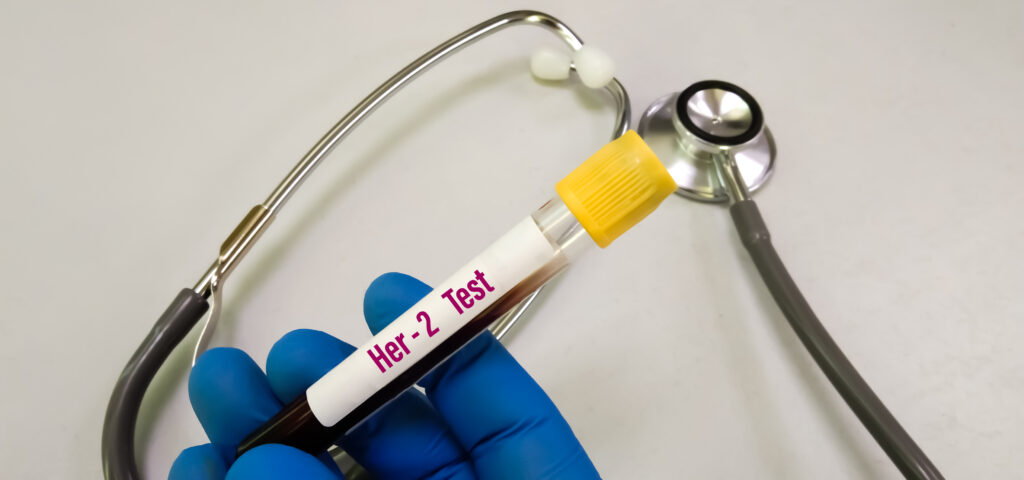
Approximately 20% of breast cancers have overexpression of the human epidermal growth factor receptor 2 (HER2), a transmembrane tyrosine kinase receptor that belongs to the epidermal growth factor receptor (EGFR) family. The normal function of HER2 is to regulate cell growth and survival, as well as adhesion, migration, differentiation, and other cellular responses. HER2 overexpression was historically associated with a poor clinical outcome.1 However, the addition of HER2-directed therapy has significantly improved the outcomes for patients with HER2 positive breast cancer. Trastuzumab (Herceptin, Genentech), a humanized monoclonal antibody targeted against HER2, was first approved for treatment of metastatic HER2-positive breast cancer in 1998. The addition of trastuzumab to chemotherapy for early stage HER2-positive breast cancer was shown to significantly reduce the risk of recurrence, leading to its expanded approval in 2006.
Chemotherapy prior to surgery had been the standard of care for patients with locally advanced HER2-positive breast cancer, and has been increasingly used for earlier stage disease. Multiple studies have shown that the pathologic complete response (pCR) at the time of surgery to neoadjuvant therapy is predictive of improved long-term outcomes. Pertuzumab is a humanized monoclonal antibody targeting HER2, but binds to a different site on the HER2 receptor than trastuzumab. Dual blockade with the combination of trastuzumab and pertuzumab has been shown to improve outcomes for metastatic and early stage HER2-positive breast cancer.3-4 Patients with Stage II and III HER2-positive breast cancer typically receive a multi-chemotherapy drug regimen with docetaxel, carboplatin, trastuzumab and pertuzumab (TCHP) prior to surgery.
The long term prognosis for early stage HER2-positive breast cancer has improved significantly, prompting investigation into options for tailoring treatment based on risk and response to therapy. A less intense chemotherapy regimen was evaluated in the CompassHER2 pCR (EA1181, NCT04266249) trial and initial results were presented at the 2025 American Society of Clinical Oncology (ASCO) Annual meeting. The trial was sponsored by the National Cancer Institute and open at multiple clinics across the state of Georgia, including community sites through Georgia CORE. A total of 2175 patients were enrolled in this single arm trial between 2020 and 2023 during the height of the COVID-19 pandemic. Neoadjuvant treatment with 12 weeks of taxane-based chemotherapy with trastuzumab and pertuzumab (THP) resulted in pCR rates of 44% for all patients. Among patients with estrogen receptor negative (ER) tumors, the pCR rate was 64% compared to 33% for those with ER-positive tumors.
For patients who had no residual disease at the time of surgery with the de-escalated THP regimen, no additional chemotherapy, but only HER2-directed therapy was given after surgery. Longer follow up is needed to establish that these patients can safely skip additional chemotherapy. The current standard of care regimen of TCHP is longer at 18 weeks and more intense, leading to greater potential for short and long term toxicity. Until the results of the CompassHER2 pCR trial are mature, careful discussion with new early-stage HER2-positive breast cancer patients is needed to determine if a patient should proceed with the standard TCHP regimen or consider the less intense THP regimen.
Identifying early stage HER2-positive breast cancer patients who can be spared from the toxicity of intense treatment while maintaining an excellent long-term prognosis is a goal we will continue to pursue.
References:
1. Slamon DJ, Clark GM, Wong SG, Levin WJ, Ullrich A, McGuire WI. Human breast cancer: Correlation of relapse and survival with amplification of the HER-2/neu oncogene. Science. 1987;235:177-182.
2. Slamon DJ, Leyland-Jones B, Shak S, et al. use of chemotherapy plus a monoclonal antibody against HER2 for metastatic breast cancer that over expresses HER2. N Engl J Med. 2001;344:783-792.
3. Baselga J, Cortes J, Kim S-B, et al. Pertuzumab plus trastuzumab plus docetaxel for metastatic breast cancer. N Engl J Med 2012;366:109-19.
4. Von Minckwitz G, Procter M, et al. Adjuvant Pertuzumab and Trastuzumab in Early HER2-Positive Breast Cancer. N Engl J Med 2017;377:122-31.
5. Tung N, et al. Predicting pathologic complete response (pCR) from clinicopathologic variables and HER2DX genomic test in stage II/III HER2+ breast cancer treated with taxane, trastuzumab, and pertuzumab (THP): Secondary results from the EA1181/CompassHER2 pCR trial. ASCO Annual Meeting 2025; Abstract 501.
 Amelia B. Zelnak, MD, MSc
Dr. Zelnak is a Hematologist and Managing Partner at Atlanta Cancer Care. Dr. Zelnak is a board-certified hematologist and medical oncologist with expertise in treating solid tumors, blood cancers and hematologic disorders. Previously, she was a part of the faculty at Emory University in the Department of Hematology and Medical Oncology. She is a member of the Northside Hospital Breast Care Committee, Northside Hospital Cancer Institute Breast Research Work Group, NHCI Research Advisory Committee, Susan G. Komen Atlanta Advisory Council, and the Georgia NCORP Clinical Research Team.


