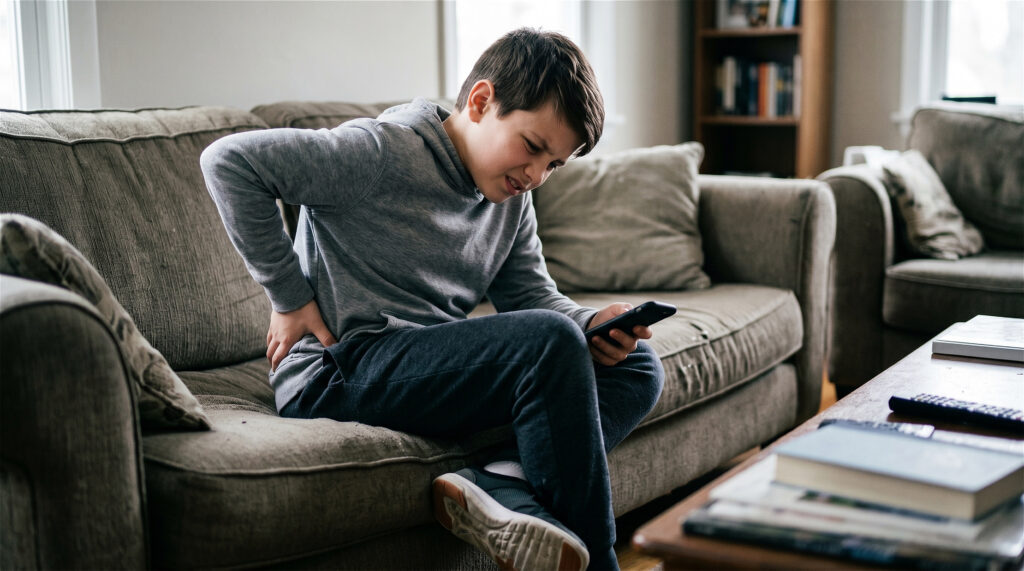
Back pain is something most adults expect to experience at some point in their lives, but it can be surprising—and often concerning—when a child or teenager begins to complain of it. Many parents understandably worry that back pain in a young person may signal a serious underlying problem. Fortunately, this is rarely the case. The vast majority of back pain in children and adolescents is benign, mechanical in nature, and highly treatable. Understanding the common causes, as well as the less frequent but important conditions, can help families respond appropriately and with confidence.
In pediatric patients, most back pain falls into the category of mechanical or muscular pain. This type of discomfort arises from the muscles, ligaments, and joints of the spine rather than from structural disease or systemic illness. In general, this pain reflects how the spine is being used—or sometimes underused—rather than an intrinsic problem with the spine itself. Two major patterns are commonly seen. The first is athletic overuse. Children and adolescents who participate in sports, particularly those involving repetitive extension, rotation, or impact such as gymnastics, football, lacrosse, soccer, and dance, are at risk for developing back pain due to cumulative stress on the spine. This can lead to muscle strain, irritation of the joints, or stress reactions in the bone. Importantly, this type of pain is often gradual in onset and may worsen with activity.
The second pattern is sedentary underuse, which has become increasingly common. Many children spend prolonged periods sitting in school, completing homework, or using electronic devices. Over time, this can lead to deconditioning, where the muscles that support the spine become weaker and less coordinated. As a result, even routine activities may provoke discomfort. This form of back pain is often overlooked but is an important contributor in today’s increasingly sedentary environment.
One common misconception is that poor posture is a primary cause of back pain in children. While posture may play a minor role in some cases, it is rarely the primary driver of symptoms. Focusing exclusively on sitting up straight is generally less effective than improving overall strength, flexibility, and activity levels. In most cases, the issue is not posture itself but rather the underlying conditioning and activity patterns of the child.
Although mechanical causes account for the majority of cases, there are less common conditions that should be considered. Spinal deformities such as scoliosis and kyphosis are often identified during adolescence, typically during routine screening or evaluation for asymmetry. It is important to note that scoliosis itself is less likely to cause significant pain, particularly in mild to moderate cases. However, more larger curves may lead to muscle fatigue related to spinal imbalance, which can contribute to discomfort. The presence of back pain in a child with scoliosis does not necessarily indicate progression of the curve, but it does warrant evaluation.
Another relatively common identifiable cause of back pain in adolescents, particularly in athletes, is spondylolysis, which represents a stress fracture in a portion of the vertebra. In some cases, this may progress to spondylolisthesis, where one vertebra slips forward relative to another. These conditions are most often seen in sports that involve repetitive extension of the spine and typically present with activity-related pain that improves with rest. Many patients with spondylolysis do not have any symptoms, and thus the presence of these stress fractures is not necessarily a major cause for concern. The treatment for stress fractures typically centers on rest followed by physical therapy to strengthen the core and lower back musculature. Surgery should be reserved for patients who have failed to find relief after extensive nonsurgical management.
Trauma is another potential cause of back pain, usually related to sports injuries, falls, or other accidents. In most cases, these injuries are minor and involve muscle strain or contusion. However, more significant injuries should be considered when pain is severe, function is limited, or neurologic symptoms such as numbness or weakness are present.
Infection and tumors of the spine are rare but important considerations. Spinal infections may present with persistent pain, fever, fatigue, or reluctance to participate in normal activities, particularly in younger children. Tumors are uncommon but can present with persistent or worsening pain, especially pain that occurs at night or is associated with systemic symptoms such as weight loss. While these diagnoses are understandably concerning, it is important to emphasize that they represent a very small minority of cases.
Most children with back pain do not require imaging studies such as X-rays or MRI at the initial evaluation. A careful history and physical examination are typically sufficient to guide management. Imaging is generally reserved for cases where symptoms persist despite appropriate treatment, where concerning features are present, or where a specific diagnosis is suspected. Avoiding unnecessary imaging helps prevent anxiety, limits radiation exposure, and limits the identification of incidental findings that may not be clinically relevant.
Treatment for most pediatric back pain focuses on restoring normal function rather than simply relieving symptoms. Physical therapy is the cornerstone of care in the majority of cases. Therapy programs emphasize strengthening of the core and back muscles, improving flexibility, and promoting proper movement patterns. This approach addresses the underlying contributors to pain and helps facilitate a safe return to normal activities. While short periods of rest may be appropriate during episodes of acute pain, prolonged inactivity is generally discouraged, as it can delay recovery.
Medications such as acetaminophen or nonsteroidal anti-inflammatory drugs may be used for short-term symptom relief, but they are not the primary treatment. More intensive interventions, such as bracing or surgery, are rarely required and are typically reserved for specific conditions such as significant spinal deformity or structural instability.
From a prevention standpoint, maintaining a healthy level of activity is one of the most effective strategies. Encouraging regular exercise, promoting core strength and flexibility, and avoiding excessive specialization or overtraining in a single sport can all help reduce the risk of back pain. At the same time, limiting prolonged sedentary behavior is equally important. Rather than focusing solely on posture, the goal should be to support a strong, balanced, and active musculoskeletal system.
Ultimately, the key message for families is reassurance. Back pain in children and adolescents is relatively common, and in most cases, it is not a sign of a serious condition. With appropriate evaluation and a focus on activity-based treatment—particularly physical therapy—the majority of young patients experience significant improvement and return to their usual activities without long-term consequences. Awareness of the less common causes ensures that those who do require further evaluation are identified promptly, while allowing most children to be managed effectively with simple, conservative measures.
 Nicholas D. Fletcher, MD
Dr. Nicholas Fletcher is a pediatric orthopedic surgeon at Children’s Healthcare of Atlanta(CHOA), where he serves as Medical Director of the Spine Program and Professor of OrthopedicSurgery at Emory University. He specializes in pediatric spinal conditions, including scoliosis,kyphosis, and spondylolysis. A recognized expert in spinal deformity, he lectures nationally andinternationally and has authored over 100 peer-reviewed publications, with a primary focus onscoliosis and kyphosis treatment.


