Depending on which headline you read this morning, artificial intelligence is either about to make physicians obsolete or about to bankrupt the venture capitalists who bet on it. One camp promises a job apocalypse; the other insists the whole thing is a nothingburger and a market crash is overdue. Both camps are wrong in the same way. They are arguing about the destiny of a technology when the questions that make your care for patients sustainable are much smaller ones. Does this particular tool, on this particular Tuesday, give you back time or take it away? Does it reduce a specific kind of error you actually make? Does it leave the patient in front of you a little happier and healthier than they were before? The truth about medical AI is less cinematic than either prophecy and far more useful. It sits, I believe, in the middle.
Genuinely impressive, genuinely limited
It would be a mistake to dismiss the potential of AI. It is, in places, close to magical. Modern AI systems manage staggering volumes of knowledge, take multi-step action without being told each discrete instruction, and increasingly reason across messy inputs such as signals, images, and free text rather than tidy structured fields. The move toward agentic AI, where a model chains tasks together toward a goal, is real and accelerating.
And yet the same AI hallucinates with total confidence, carries meaningful cost, and has an environmental footprint we are only beginning to reckon with. Layering on the parts that have nothing to do with the model at all, such as regulatory uncertainty, patient acceptance, and the awkward fact that business innovation rarely keeps pace with technical change, gives us the opportunity to manage the pace of change with AI. As physicians, that should be liberating news, because it means the useful questions are ones we are already trained to ask. Where is the evidence? What are the KPIs and outcomes we are taking aim at? And does it any of this apply to my patients?
Worth remembering, too, that our patients are not waiting for us. They are already using these tools themselves to make sense of symptoms, medications, and lab results, in no small part because it can take weeks or months to get an appointment on our calendars. The question is no longer whether AI enters the exam or procedure room. It is how we practice when patients arrive already diagnosed by it, lacking the training to weigh its answers, and driven there by frustration with a system that kept them waiting in the first place.
Where the evidence has actually landed
The clearest signal in the recent literature is for ambient AI documentation, the scribe that listens to your visit and drafts the note. This is worth dwelling on, because it is one of the first medical-AI use cases with a genuine evidence base rather than a keynote slide at a medical conference promising the moon.
A 2026 longitudinal study across five systems, including Yale New Haven, Emory, UC Davis, UCSF, and Mass General Brigham, followed 8,581 ambulatory clinicians, including 1,809 who adopted AI scribes. After adoption, clinicians averaged about 16 fewer minutes of documentation time per eight scheduled patient-hours, 13.4 fewer minutes of total EHR time, and roughly half an additional visit per week. Notably, there was no significant drop in after-hours EHR time overall. Translation: meaningful, not miraculous, and highly variable between users. The gains were largest for primary care, advanced practice clinicians, and those who actually used the tool for at least half their visits.
On the money question, a January 2026 JAMA Network Open analysis of more than 1.2 million UCSF visits found adoption associated with about 1.81 additional work RVUs per physician per week and roughly $3,044 in additional annual Medicare revenue per physician, before subtracting the cost of the tool, with no significant rise in claim denials. It is observational and single-system, so early adopters may simply be different, but it is among the most credible published hints of a real return on investment.
A UCLA randomized trial of 238 physicians across 14 specialties and roughly 72,000 encounters is my favorite of the bunch, because it broke the spell that all these tools are interchangeable. Nabla users cut note-writing time by about 9.5% versus controls and improved burnout measures by roughly 7%. The DAX arm showed a smaller, non-significant documentation change. Same category, different results. The trial also caught occasional clinically meaningful inaccuracies, a standing reminder that the human still signs the note.
Closer to home, a 2025 study at Emory and Mass General Brigham found roughly a 30% improvement in well-being among responding Emory clinicians and about a 21% reduction in burnout at Mass General Brigham, with clinicians reporting less documentation stress and more attention on the patient in front of them. A companion six-system study saw self-reported burnout fall from about 52% to 39% after just 30 days. Both carry the honest caveat of low survey response rates, but they still offer a useful signal from Emory and others for clinicians to interpret with their own judgment. The largest operational dataset, from The Permanente Medical Group, logged more than 2.5 million ambient-scribe uses in year one and an estimated 15,000-plus documentation hours saved.
Two cautions keep the enthusiasm honest. First, better output does not guarantee net time saved. Early Stanford work on AI-drafted patient-inbox replies produced messages patients loved for tone and empathy, yet total inbox time did not reliably fall, because someone still had to read and edit each draft. Second, a 2025 policy analysis in Nature warned that documentation tools which legitimately capture more complexity could also nudge systems toward a “coding arms race,” inviting payer audits and downcoding. More complete is good. What happens when every note and report is systematically more complete and accurate?
Five bright spots worth your attention
Setting the prophecies aside, here is where the practical wins are clustering at Emory and elsewhere. The right question is which of these maps onto your practice.
- AI embedded in the EHR. The tools that succeed are the ones that meet you inside your existing workflow rather than asking you to open one more tab. If it lives where you already work, it gets used. If it lives in a separate portal, there is a higher bar for adoption.
- Ambient AI scribes. As above, the strongest evidence base of the lot, with real burden reduction for a meaningful subset of clinicians. Worth a serious look for anyone drowning in after-visit documentation.
- Diagnostic automation in imaging. For radiologists, cardiologists, ophthalmologists, and pathologists, AI is increasingly good at finding, flagging, and automating narrow, repetitive detection tasks. It triages worklists and helps generate succinct report impressions, so the specialist spends attention where skill and judgment is required. Reliable, general-purpose AI interpretation of CT, pathology slides, and retina images is closer than before but still remains beyond our immediate horizon.
- Voice agents and population health. AI voice agents handling call-center volume, and models managing population-health outreach at scale, have quietly become some of the most impressive back-of-house wins. Less glamorous than a diagnostic breakthrough, but they move real operational numbers.
- Revenue cycle and back office. Coding support, prior-authorization drafting, and revenue-cycle automation are where a great deal of administrative burden can be lifted. This is the unglamorous plumbing that, done well, quietly funds everything else.
Explore, don’t ignore
So here is the final, unromantic advice. Do not wait for the prophecies to resolve. They will not, and predictions in this field are worth roughly what you paid for them. Instead, run a simple test on any tool that crosses your desk. Does it make you more productive, less burnt out, or faster? Is it actually relevant to how you practice? If yes, consider a pilot. Maybe adopt it deliberately. Consider carefully a big rollout. If not, let it go without guilt.
In the interest of full disclosure, and as a small case in point, AI helped me draft and edit the article you are reading. It did not supply my opinions or my editorial judgment, or check the references, but it helped tightened my sentences, and gave me back hours I would rather spend elsewhere. That is the whole argument in miniature. AI is not a replacement for judgment or expertise, but can be a genuine multiplier of it.
You do not have to figure this out alone, and you should not try. Talk to colleagues who have already lived through an implementation and ask what they wish they had known. Consider taking a short course to build genuine fluency rather than headline literacy. Assign a go-to AI or informatics expert for your practice, someone whose job it is to know the landscape so the rest of you do not have to. And ask what AI tools are available to you, because supervised experience beats speculation every time.
Above all, pay attention to compliance, fairness, and ethics, unless you want to end up in the headlines in a bad way. Adopt with governance you set at the level of the individual physician, the practice, and the system, and with guardrails that keep patients and staff safe. The physicians who invest the time now, to learn these tools, to test them honestly, to be curious rather than credulous or dismissive, are the ones who will be practicing on their own terms a decade from now. The winners in this transition will not be the loudest believers or the proudest skeptics. They will be the ones who quietly figured out which tools were worth keeping and passed the benefit along to their patients.
References
- Rotenstein LS, Holmgren AJ, Thombley R, Sriram A, Dbouk RH, Jost M, Aizenberg D, MacDonald S, Kanaparthy N, Williams B, Hsiao A. Changes in clinician time expenditure and visit quantity with adoption of artificial intelligence–powered scribes: a multisite study. JAMA. 2026 Apr 28;335(16):1408-17.
- Holmgren AJ, Fenton CL, Thombley R, Soleimani H, Croci R, DeMasi O, Byron ME, Murray SG, Adler-Milstein JR, Yazdany J. Ambient artificial intelligence scribes and physician financial productivity. JAMA Network Open. 2026 Jan 9;9(1):e2553233.
- You JG, Dbouk RH, Landman A, Ting DY, Dutta S, Wang JC, Centi AJ, Macfarlane M, Bechor E, Letourneau J, Choo-Kang G. Ambient documentation technology in clinician experience of documentation burden and burnout. JAMA network open. 2025 Aug 21;8(8):e2528056.
- Olson KD, Meeker D, Troup M, Barker TD, Nguyen VH, Manders JB, Stults CD, Jones VG, Shah SD, Shah T, Schwamm LH. Use of ambient AI scribes to reduce administrative burden and professional burnout. JAMA Network Open. 2025 Oct 2;8(10):e2534976.
- Tierney AA, Gayre G, Hoberman B, Mattern B, Ballesca M, Wilson Hannay SB, Castilla K, Lau CS, Kipnis P, Liu V, Lee K. Ambient artificial intelligence scribes: learnings after 1 year and over 2.5 million uses. NEJM Catalyst Innovations in Care Delivery. 2025 Mar 31;6(5):CAT-25.
- Garcia P, Ma SP, Shah S, Smith M, Jeong Y, Devon-Sand A, Tai-Seale M, Takazawa K, Clutter D, Vogt K, Lugtu C. Artificial intelligence–generated draft replies to patient inbox messages. JAMA Network Open. 2024 Mar 20;7(3):e243201.
- Dai T, Kvedar JC, Polsky D. Policy brief: ambient AI scribes and the coding arms race. npj Digital Medicine. 2025 Dec 24;8(1):780.
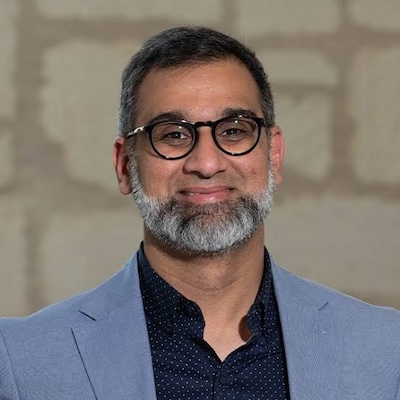
 Nabile Safdar, MD, MPH is a practicing radiologist and physician executive whose work focuses on how artificial intelligence can be responsibly designed, deployed, and governed in healthcare and higher education. He serves as Chief AI Officer for Emory Healthcare and Emory University, where he is responsible for establishing enterprise AI strategy, guiding deployment across clinical and operational workflows, and advising senior leadership on governance, risk management, and value realization.


