
Atlanta-area physicians are at the forefront of groundbreaking cancer treatments that draw patients from all over the country.
Cutting-edge Therapies for Brain Tumors in Children
When Dr. Tobey MacDonald was recruited by Dr. Bill Woods to join the Pediatric Brain Cancer Program at Children’s Healthcare of Atlanta in 2009, he was astounded by the fact that no such program had already been well established in a large, progressive city like Atlanta.
“At the time, one of the biggest areas of need for childhood cancer in the state of Georgia was for the provision of investigational therapies that were cutting-edge, novel clinical trials. No such program existed in Atlanta, which has one of the largest populations in the country,†says MacDonald, who now serves as Director of the Pediatric Neuro-Oncology Program at the Aflac Cancer and Blood Disorders Center of Children’s. “It just didn’t make sense to me that families had to leave this large city and travel to treatment centers in other states. So my goal was to develop a program that would provide those novel investigative National Institutes of Health (NIH) trials here.â€
Starting with two physicians and one scientist performing solo brain tumor-related research, the Children’s Pediatric Brain Tumor Program has grown over the past 10 years to include six physicians, along with five collaborative basic scientist investigators, who provide clinical care in a coordinated approach that is consolidated on the Scottish Rite hospital campus.
“This coordinated care approach allowed us to develop and implement the first Children’s Oncology Group (COG) Phase I trials for any pediatric cancer at Scottish Rite once we became one of the 25 members of the COG Phase I Member sites in 2013-2014,†says MacDonald. “Since then, we have been accepted as members of the highly competitive NIH-sponsored Pediatric Brain Tumor Consortium (PBTC) in 2017 and as members of the Department of Defense (DoD) NF Clinical Trials Network. Together, this makes us one of only five centers in the U.S. with access (via COG Phase I, PBTC and DoD NF Network) to offer all early Phase I and II NIH-sponsored clinical trials for children with brain tumors. We now have 2,030 children in an early phase clinical trial on any given day.â€
Currently, the Children’s Pediatric Neuro-Oncology Program is participating in three innovative clinical trials of potentially helpful medications that have attracted patients not just in Georgia, but throughout the U.S., with some international requests as well. These include an immunotherapy called Indoximod, developed in collaboration with investigators at Children’s Hospital of Georgia in Augusta; Abemaciclib, a biological therapy trial developed by Dr. Cynthia Wetmore, a former developmental therapeutics leader for Children’s; and WP1066, a Stat 3 inhibitor slated for use in a clinical trial for children this year. MacDonald says WP1066, which is designed to treat refractory brain tumors, holds particular promise because it kills the cancer cell and simultaneously promotes an immune response.
“WP1066 was developed by a chemist at MD Anderson Cancer Center and is already being used in clinical trials for adults. This drug has been shown to kill the cancer stem cell or the ‘seed’ of the tumor,†he explains. “We’re currently testing it in our own lab and have plans to put it into practice later this year.â€
While MacDonald says that childhood cancer overall is relatively rare, there are about 4,000 diagnoses of brain tumors per year, making them the leading cause of death due to cancer in children. He encourages pediatricians to look for warning signs that sometimes mimic other run-of-the-mill childhood illnesses, especially during the winter season.
“Red flags for possible brain tumors in children are flu- like symptoms with no fever, chronic headaches and trouble with balance such as falling over or having difficulty performing activities they formerly could do well. In infants, it’s more difficult to detect because they can’t tell you they have a headache … but they may be irritable for no apparent reason,†he says. “It’s important that a physician who treats children keeps an awareness of this possible diagnosis in the back of their mind.â€
 Promising Strides in Donor Matching, Gene Therapy
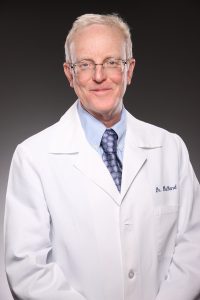
Two innovations in cancer treatments for adult patients are in practice now at Northside Hospital Cancer Institute’s (NHCI) Immunotherapy Program. According to H. Kent Holland, M.D., medical director of the Blood and Marrow Transplant Program and co-director of the Stem Cell Processing Laboratory at Northside, these therapies offer patients with leukemia and other blood cancers an improved chance of beating their disease.
“Historically, patients who needed a bone marrow or stem cell transplant required a full-match donor. But in partnership with Johns Hopkins University, we have con- ducted clinical trials that proved we are able to use a half-match donor to perform a successful transplant,†Holland says. “This means that almost anyone [who is not adopted] has a donor in their family who will be a match. There is a 30-40 percent chance that a sibling will match.â€
Holland adds that this new knowledge has helped overcome the disparity between races in finding a match for bone marrow or stem cell transplantation.
“For example, there is about a 70 percent chance that we can find a family donor in a Caucasian family, but if you’re African American, the odds of finding a family match are much lower. We believe this is related to the way genetic codes are inherited over the millennia and how people have migrated across the planet,†he says. “But with our new knowledge, we can now find a relative who is at least a partial match in almost every race.â€
A second treatment, CAR T-cell therapy, is making a difference for adult patients with certain types of blood cancers like leukemia, relapsed refractory multiple myeloma and diffuse large B-cell lymphoma.
“This is a form of gene therapy where we can take a person’s immune cells and insert a gene that has been trained to kill cancer cells,†Holland says. “The process involves extracting the patient’s T-cells (rather than stem cells) and sending them off to a lab where they are infected with a gene vector. This causes a change in the T-cells so that they know how to target leukemia or lymphoma. They are now called CAR (chimeric antigen receptor) T-cells.â€
It takes about three weeks to prepare the CAR T-cells in the laboratory. When ready, the patient is infused with a small dose of his or her own CAR T-cells, which then float through the body, locating and engaging with cancer cells.
“The CAR T-cells attach to the cancer cells and kill them. Once this begins, the CAR T-cells also start to proliferate by cloning themselves and multiplying,†Holland says. “We don’t know exactly how long CAR T-cells remain in the body, but for months – possibly years – they can continue to engage with and kill cancer cells.â€
Currently, CAR T-cell therapy is appropriate only for patients who have failed other therapies and have no other recourse for treatment. It comes with several health risks, including an intense inflammatory reaction, high fever and low blood pressure.
“Patients who receive CAR T-cell therapy are usually in the hospital for 10 to 14 days due to the inflammatory syndrome it causes. Eventually, as the leukemia or lymphoma goes away, the inflammation starts to subside,†Holland says. “If the therapy is successful, all of the disease is usually gone within 30 days.â€
Holland says that patient survival rates are improving.
“Research suggests that for B-cell lymphoma patients who are otherwise incurable, 45-50 percent who have undergone CAR T-cell therapy are alive and well with long-term follow up. For leukemia patients, the success rate is higher, about 60-70 percent,†he says. “But it will take 5+ years of follow up to know how accurate these numbers are.â€
The future looks bright for CAR T-cell therapy. Cells are now being developed to treat other forms of cancer including lung, melanoma, colon and glioblastoma.
“We don’t yet know if CAR T-cells will work on solid tumors,†Holland says. “But for liquid tumors, this therapy has proved to be effective.â€
Northside is one of only two cancer centers in Georgia to offer CAR T-cell therapy, which is only administered by bone marrow or stem cell transplant physicians. A facility must be accredited to offer the treatment.
Proton Therapy Offers Non-invasive Form of Radiation Treatment
The Emory Proton Therapy Center, the first and only facility of its kind in the state of Georgia, officially opened its doors in December 2018.
Proton therapy is a painless and non-invasive form of external beam radiation that can be used in the successful treatment of patients with a variety of cancer types and benign tumors. The state-of-the-art center, which features a 90-ton cyclotron that generates proton particles and four 240-ton gantries that rotate 360 degrees around the patient to precisely aim the proton beam at a tumor, is expected to treat close to 400 patients in its first year.
“The new Emory Proton Therapy Center supports all three of our missions of patient care, research and education,†says Jon Lewin, M.D., executive vice president for health affairs and president, CEO and chairman of the Board of Emory Healthcare. “Clinician-researchers at the proton center will have unique opportunities through clinical trials to develop targeted new treatments that may lead to new cures.â€


